

Helping crime fiction writers finish stronger manuscripts, master story structure, and write books that keep readers up all night.
Book coaching for
mystery, thriller, suspense, and Horror writers
-
Working with sabrina was one of the best decisions iv'e made for my manuscript
—GK Daffu
2025 Winner of Daphne du Maurier Award for Unpublished Mystery/Suspense -
SABRINA'S INSIGHTS ALWAYS MAKE MY STORY BETTER
—Kristen Bird
USA Today Bestselling Author of Watch It Burn -
My crime thriller is faster paced and harder hitting because of her feedback
—Chris Wendel
Author of The Fate of Leaves -
Brainstorming with you was just plain fun
—Sterling Savage
What’s a book coach?
Book coach. Developmental editor. Writing group. Beta reader. All common terms you will find when learning how to write—and publish—your work. So what’s the difference? Here’s a quick overview of what to expect with each support system.
-
More often than not, a writing group is your entry support system. Groups can be informal (grab some friends and meet up to write or talk about your work) or formal (register for a critique group through organizations like International Thriller Writers or Mystery Writers Association).
A writing group is made up of—you guessed it—other writers. These people can become your closest writing friends: the ones who have seen fifteen iterations of your first three chapters, the ones who will cheer you when you sign with your dream agent, and then be first in line to have you sign your debut novel.
Writing is a solitary sport. But writing groups can help you find community and learn faster than if you are doing it all alone. Every reader has a different lens and can help you see something you couldn’t in your WIP or teach you a great tip that you couldn’t have learned anywhere else!
The challenge of writing groups is that they are typically made up of people like you—learners, amateurs, aspiring-to-be-published authors. Not all groups are created equal and can quickly become overwhelming. So much feedback—not all of it helpful—and then you have to sort out what works for your novel and what doesn’t. Discernment is a skill.
Pro-tip: A book coach can help you learn to discern feedback to figure out what will improve your project vs someone with a big head picking your work apart because they like to hear their own voice. Discernment is a skill—I’ll help you learn it.
-
“The best thriller I’ve ever read!” – Your mom
“OMG it’s soooo good! I would pick this up off the shelf.” – Your bestie
“Utterly brilliant. Best thing ever written.” –Your spouse
“I liked it, but I saw the twist coming a mile away.” –Your cousin who reads mysteries and thrillers like you drink Diet Coke.
A Beta reader is someone who is not a writer that you ask to read your book before you share it with the world. The idea is to get their feedback on the story—did they like it? Did the story work? Did they have the kind of reaction you’re hoping your readers will have?—so you can incorporate changes into your manuscript. Everyone needs fresh eyes on their novel before querying or self-publishing.
The problem with these kinds of beta readers is that they may not know how to tell you what’s wrong. Or worse—they may lie to you to spare your feelings.
They love you and want to support you on your publishing journey. They are great for an on-the-ground perspective (particularly from an avid reader) and all the ego boosting you could ever need! But they probably can’t tell you how to fix your book.
You should have a beta reader. They are important—not only to gut check but to give you the encouragement you need to keep going.
Protip: A book coach can tell you WHAT isn’t working and WHY. If you decide to ask for some beta readers (I recommend you do before sending agent queries!), make sure to write a list of questions you’d like them to answer.
-
A Developmental Editor is a professional who focuses on the big picture of your book—the structure, story arc, character development, etc. Most often, developmental editors will complete manuscript evaluations with a multi-page editorial letter outlining strengths, weaknesses, and a revision roadmap. Most often, a writer will meet with a Developmental Editor once after a manuscript assessment has been done.
Typically, writers will work with a developmental editor after they’ve completed a draft of their manuscript.
Protip: A book coach is a developmental editor with sprinkles. You can hire a book coach from the moment you have an idea all the way through querying, including when you are looking for a manuscript evaluation. That’s how I meet most of my clients!
-
This is me!
A book coach acts like a writing group, a beta reader, and a developmental editor all rolled into one—plus some! I’m also there to hold you accountable as a project manager, support the emotional ups and downs that come with writing (and there are many!), and run right next to you as you chase your dreams of being a published author.
When you figure out the plot twist in the middle of the night—your book coach is the one who wants to see your news first thing. When you discover that the detective in your thriller is really the villain—your book coach is the one who is going to shout from the rooftops. When you keep saying “I’m going to write a book,” but never get past chapter one—your book coach is the one who to call you on it and help you figure out what’s blocking you, remove it, and get you on your way. When your agent queries keep getting rejected after full requests—your book coach is going to be the one to tell you the truth; it’s not ready. And they’ll all be the one to help you get it there.
Protip: Book coaches are also often educators who teach workshops or webinars or write articles and Substack newsletters. With a background in adult learning, it’s my goal as a coach to make sure I’m not sure helping you with this manuscript but also teaching valuable skills and lessons to take with you in your next novel.
If you want more insight on book coaching from Jennie Nash, the premiere expert on this line of work, check out her article with Jane Friedman; Why Do Writers Hire Book Coaches?
WHO I HELP
You. The writer with a story to tell.
But something is stopping you
You have an idea but no outline
You can’t finish your first draft
Your twists aren’t landing
You’ve revised endlessly
You’re preparing to query
a Cheerleader
with a Knife
What this means is that when you work with me, you’ll get someone who is going to be brutally honest without killing your enthusiasm for the work. I won’t pull punches about what’s not working and I won’t stop believing in your ability to make your story shine. I won’t let you stop believing it either.
genre fanatic
I love thrillers. I just do. I love suspense and mysteries and horror as well. But a psychological thriller with a twist that makes your jaw drop and gasp out loud…there’s not much sweeter. And because of this, I have read hundreds of crime fiction novels. I hosted a podcast for 3 years for readers that featured book reviews and recommendations called Thrillers by the Bookclub Podcast. I now host a podcast focused on the craft of writing the dark and twisted—Slaying the Craft.
One of my superpowers is finding the right book for the right reader. When we work together, you will likely receive many book recommendations to study either as comps or with something specific you’re doing in your story that was done well elsewhere. I stay on top of market trends with new releases and book deals because I can’t wait to know what’s coming out. This benefits both of us!
No matter how dark you go, I won’t blink. I don’t have many triggers and even if you think your story is super dark I’m willing to dig into the depths with you. I am not a good fit for anything with animal abuse or death. Otherwise, bring on the wild, twisted, unhinged stories.
Educated & experienced
Before becoming a book coach, I was just like you. A reader and writer who loved talking about books and wished I could do it all day. When I discovered book coaching, I found a way to bring all my professional experience together with my writing and genre expertise, making me the perfect person to help you write your thriller.
I’ve spent nearly twenty years in professional industries as a project manager. I managed timelines, accountability, and milestones for everything from events to software to adult learning. My career has always included some element of teaching adults. When I worked in non-profit fundraising, I developed an award-winning training event. When I worked in tech, I trained new project managers until eventually moving to the learning and development team where I earned a certificate in adult learning from the Association of Talent Development.
I am certified through Author Accelerator as a fiction book coach. This was a rigorous training program on how to analyze a book from end to end. My genre expertise comes from my own reading and writing experience, as well as hundreds of hours in workshops, classes, conferences, and webinars on the craft of writing.
Connected
My podcast, Slaying the Craft, is education-focused, which means every interview with an author gets tactile into how to apply techniques and skills to their own work. This means if you have a burning question and I don’t know the answer…I can ask my next author guest for their perspective.

Plan
How I Help

Write

Revise
FREQUENTLY ASKED QUESTIONS
What is Tension in Writing?
You know the moment right before two characters kiss for the first time? That’s tension. It’s the secret ingredient that makes a story compelling, the thing readers can’t look away from. Tension is essential beyond thrillers, though it’s a major component for the genre. Every story requires tension to be compelling. For example:
Imagine driving by an accident on the side of the road. The two drivers are standing near one another, but their faces are knitted in frustration or anger. Traffic is slow and the show is interesting. For that moment as you drive by, you are witnessing tension between two people. The context is the accident—a conflict. How the drivers react is tension.
Tension goes wrong when it’s forced—when there isn’t context. Romance, for example—the yearning is tension and you can’t get there without understanding the characters and the context of their points of view—their experiences. Introducing a character and killing them within two paragraphs, with a huge emotional reaction from the protagonist usually isn’t going to provide enough context to hit the right level of tension.
To test how tension is showing up in your scenes, pay attention to your body’s reactions while you read it back. Do your shoulders go up? Do your muscles still? Does your leg bounce on its own? Or does your body have no reaction? If you don’t feel it, your readers won’t either.
Remember, tension building happens in revision. Don’t stress about making sure every scene is filled with tension in your first draft. Just keep writing!
What is Misdirection in Writing?
A character is looking around a crime scene. They clock a smear of blood, a hand mirror, contact solution, a hairbrush, a textbook on human anatomy, some hypodermic needles, vials of liquid medicine, and a gun.
One of these things is the clue that breaks the case wide open.
Where does the character track down first? The gun, right? That’s the obvious answer. Later, she learns the victim didn’t die from a gunshot—he died from poisoning. So she investigates the vials of liquid medicine. Oh wait, those lead to a dead end too—they were all prescribed to the victim and had expected quantities in their blood.
When it becomes clear that the victim was drugged through their eye ducts, the truth about the contact solution comes to light—it carried the poison.
This is an example of misdirection. It’s the way writers play a guessing game with their readers. It’s directing the reader to look where the author wants them to look—believe what the author wants them to believe in order to effectively deliver the gasp-inducing twist or reveal.
Effective misdirection in writing turns the reader’s beliefs on their head by hiding the truth in plain sight.
How Do You Write Better Dialogue?
Dialogue can be one of the more challenging aspects of narrative fiction. It has to do so much work with little words. Readers don’t want giant monologues, silence fillers, or conversations that go in circles—which is how we speak in real life. Writing better dialogue takes work.
A few tips of advice:
You’ll hear the old advice, “go to a coffee shop and listen to conversation.” That’s great advice—you should definitely do that. But the reality is that it’s not enough and doesn’t work for everyone. You want your dialogue to sound realistic and conversational, but not exactly the way we speak in real life. It needs to be smoother than that.
Study the dialogue of your favorite novels. Take the time to see how the author managed a back-and-forth conflict, banter, or deep conversation. Notice how they break up the dialogue with action beats or interiority and reactions. Notice the amount of white space on the page.
Study the dialogue of your favorite novels again—but this time, look at what isn’t being said. What are the characters hiding? What is the tension between them? What aren’t they saying?
I recommend checking out the first scene in Chapter 7 of Razorblade Tears by SA Cosby. The scene is between Ike and his wife as they discuss what they do after their son was murdered. Pay attention to what isn’t being said. Think about Ike’s expectations and Mya’s responses.
Read your pages out loud. Yes, it’s going to feel silly. Hide in your car or lock yourself in your bedroom. Whatever it will take you to feel most comfortable. Then read your pages out loud. This is the quickest way for you to recognize clunky dialogue. You will notice that people don’t speak in grammatically perfect sentences so when your characters do, it will feel wrong.
Writing great dialogue is a matter of persistence, practice, and study. You can do it—it just might take a few tries to get it right. And that’s perfectly okay!
How Do You Write a Great Villain?
Unless your protagonist is a Jack Reacher or James Bond type, the character that’s going to most intrigue a thriller reader is the villain. So how do you write one that’s memorable? Yeah, you could give them a sympathetic back story. Or—you could take off all the shackles and let your villain be wild.
I’m of the opinion that the villain is the most fun of all the characters. Let him be unhinged. Let her be outrageous. Your villain doesn’t pull punches. He thinks differently than your hero. Villains epitomize ‘fuck politeness’. Go all in when writing your villain. You can always pull back later if needed.
The hook for a standout villain—Hannibal Lecter, Patrick Bateman, The Joker, Annie Wilkes—to name a few—is their quirks. The things that make them different from the everyday person. The way they think, the way they act. Have fun writing your villain. The more you enjoy letting go of proper etiquette and polite society, the more fun the reader will have.
Whatever your villain does to stop the protagonist in their tracks, whatever their crimes or actions, will resonate through their motivations and logic. When landing those ‘oh wow’ moments, it’s important for you to know why they are doing that. And sometimes (not all the time but often) the reader wants to understand why the villain did what they did as well. Readers often read to make sense of the world. Villains are one way for them to process darkness in reality—and to understand how these things happen.
What is Conflict in a Story?
While tension makes a story compelling, conflict is what makes a story a story. All stories start with conflict and (usually) end with conflict resolution. Let’s think about conflict beyond the idea of a fight or argument with another person and look at it from a 30,000-foot view.
You are driving down a smooth two-lane road. No cars around, no animals in the road, just smooth sailing. Then the conflicts begin. First—a speedbump comes out of nowhere. Then another. Now you’re trying to keep the car in the correct lane, but the brakes are loosened because the car slammed down so hard. The car fishtails and now there’s another car coming straight at you. You grab the wheel, pull hard to the right, push the brakes as hard as you can, and come to a screeching halt. After taking a few deep breaths, you put the car into drive and press the gas—though this time, perhaps a little more cautious.
The conflict in this example shows that things are going along for your character as normal—then something happens. Conflict interrupts their normal. It could be an internal conflict or an external one, but it’s the thing that forces your character to react, adapt, or change. There really is no story—especially a thriller—without conflict. Humans go through conflict every day—so should your characters.
You want your character to continuously meet conflict throughout your novel. Sometimes they need to fail and the conflict wins. That’s how they learn and change. Sometimes they are able to sail through with Jason Bourne martial arts precision, but more often than not, readers want to see your character try, fail, try again, fail again, try again, win.

aBOUT sABRINA
a Cheerleader with a knife
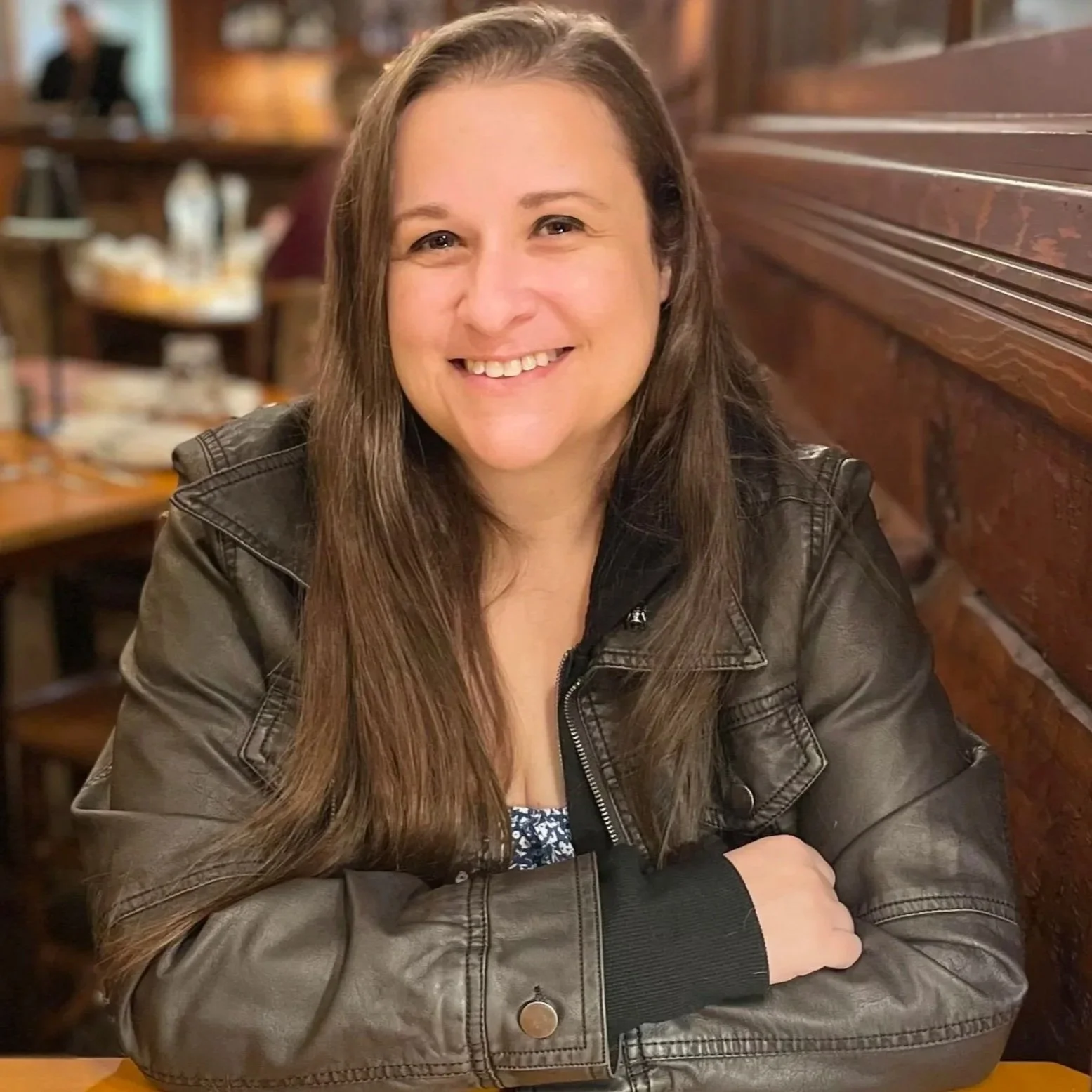
I love mysteries and thrillers.
I write them, read them, and podcast about them. Crime & Quill is the culmination of my experience as a reader and writer, an Author Accelerator Certified Book Coach, and my extensive background in project management and adult learning.
I specialize in mystery, thriller, suspense, and horror. No matter how dark you go, I won’t blink. And as a cheerleader with a knife, I can’t wait to support you in meeting your writing goals.
I am an Author Accelerator certified book coach. This means I am qualified to coach writers using Author Accelerator's strategy, methods, and materials, but I operate independently and am not affiliated.
More Crime & Quill Content
I am an Author Accelerator certified book coach. This means I am qualified to coach writers using Author Accelerator's strategy, methods, and materials, but I operate independently and am not affiliated.